I remember this frigid day in 1985, when I worked as a corporate public policy lobbyist in Washington, DC. I was awarded a rare seat for the President’s second term inauguration, held indoors in the U.S. Capitol Rotunda, due to freezing weather conditions.
It was special, indeed, even for me as a Democrat. I asked if I could have another seat, and the President’s representative looked at me with a smile saying how extraordinary it was to be presented with ONE seat. There were fewer than 1,000 spaces in the Rotunda, including for 535 members of Congress and nine Supreme Court justices. Even spouses and key staff were excluded. I was pleased to present my singular seat to my corporate chairman in London, a man who deeply appreciated the opportunity “to fly across the pond” to witness a truly historic event.
My chairman, a corporate leader in the United Kingdom, was properly referred to as “Chairman” in England. Chairman Sir Patrick Sheehy was a keen student of American politics, understanding American democratic government more than most American officials and lobbyists. He became friendly with President and Nancy Reagan.
President Reagan later came to Chairman’s aid, helping to save his British corporation from one of the two largest hostile takeover attempts in history (at the time)…against “Takeover King” Sir James Goldsmith. It was a battle of a British company trying to take over another British company in a world-wide, year-long struggle. We won, chiefly because of the American response, including from our 100,000 U.S. employees in 42 states. We broke Goldsmith’s hostile takeover attempt; it was costly and it was his last. We won this huge, international battle. Though—as people, as employees—we couldn’t beat the inevitable winds of change. The company, BATUS, was dissolved a few years later.
That was politics then—40 years ago. Where are we now? What does it mean for tomorrow? Even with all of its pomp and circumstance, Inauguration Day, today. makes me wonder if ‘public policy’ is truly “the noblest of all professions,” as Ronald Reagan and others once professed.
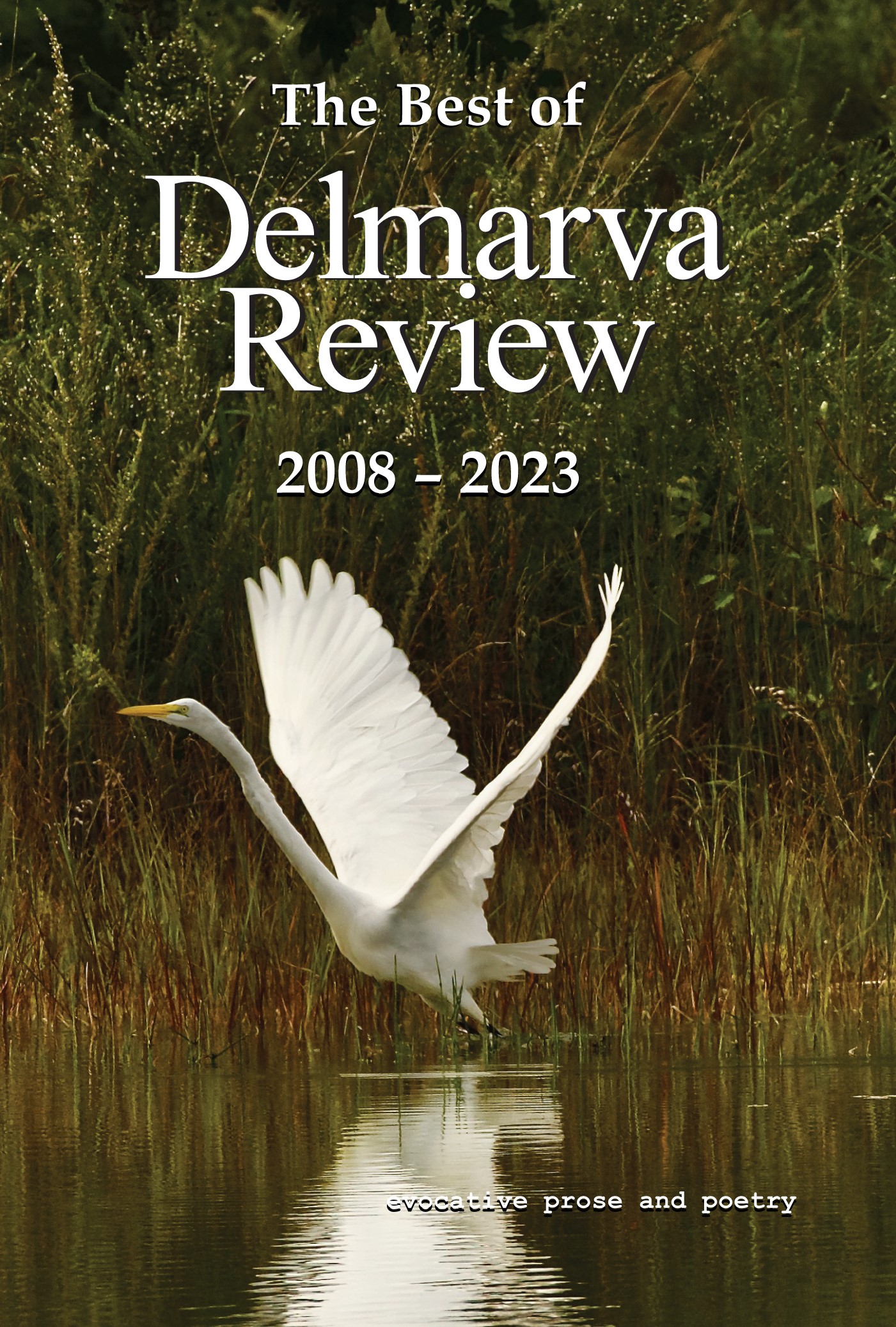
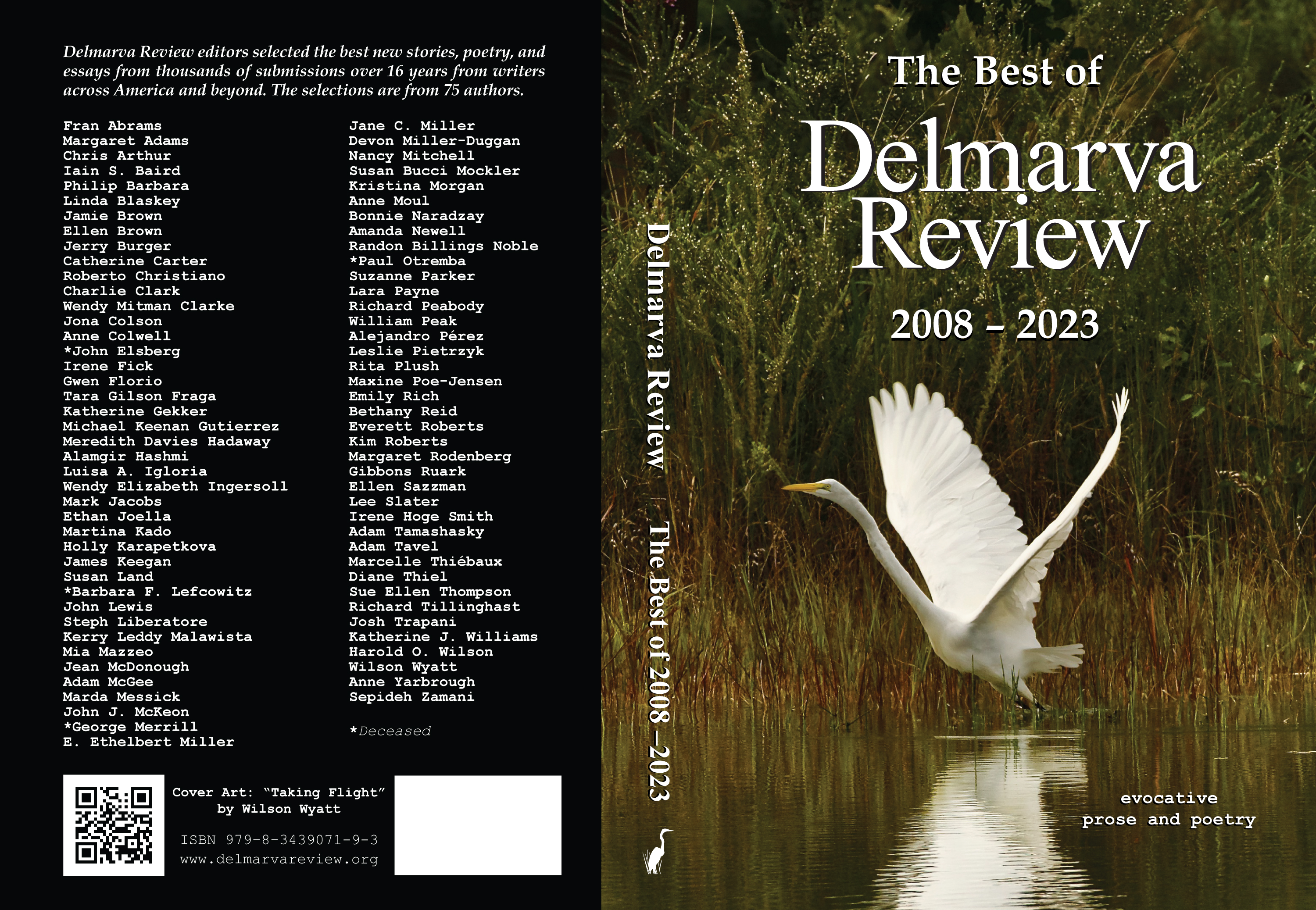
From the INTRODUCTIONto the new anthology, “The Best of Delmarva Review 2008-2023:”
EVERY STORY, EVERY POEM, EVERY ESSAY in The Best of Delmarva Review contains much more than what appears on the page. Each of the 14 stories introduces another layer beneath the surface. Each of the 63 poems presents not only what is said but what is not said, and the poet’s voice stirs new feelings with each reading. The 19 essays are relevant to you, and the personal ones will strike your emotional core with their honesty and authenticity. In all, there are interesting new worlds to explore or new ways to explore today’s world. Those are among the promises you will find in this collection.
As we selected the writing for “The Best of” anthology, we were in awe of the creativity shown by the authors published over a 16-year history. Since the first edition in 2008, the editors have read thousands and thousands of submissions from aspiring and established writers. We decided to draw attention to the writing qualities that stood out. We hope that will be useful to other writers and interesting to readers.
Editors Give “Golden” Advice on Writing
If you are an aspiring writer honing your work to submit to the best literary journals, our genre editors are offering their best advice to you in this anthology—based on their actual experience. As one writer said recently, “That’s golden.”
The anthology is divided into three sections: Fiction, Nonfiction, and Poetry. Each is the size of a small book. Each begins with an “Introduction” taken from an interview with the editors. They describe key qualities that stood out to make an outstanding short story, an excellent poem, or a memorable personal essay. The observations are offered to enrich an inquisitive reader’s enjoyment.
Welcome to The Best of Delmarva Review, 2008 – 2023
The outstanding writing of 75 authors was selected from 550 writers published by the Delmarva Review over its 16 years. We should point out, once again, that all of those published were chosen from thousands of submissions. Our editors read each one in search of the best new work. The review’s emphasis has always been on outstanding writing quality.
Delmarva Review, a National Literary Review
Sometimes our name improperly implies a regional literary journal. The authors published in this volume are from 18 states, the District of Columbia, and one from Scotland. It is significant that two-thirds are from the tri-state Chesapeake-Delmarva region. That is a testament to having active local writing organizations. The fact that the Delmarva Review has welcomed submissions from all writers, regardless of borders, has given authors the opportunity to grow. Their creative strengths can be seen among their peers everywhere, in both print and digital editions, thanks to internet technology. While a unique opportunity for writers, the national and international competition for new quality work has been substantial. For every hundred submissions received, two reached the stage of publication. As the review grew in recognition, the number of submissions reached into the thousands annually. We read them all, as promised, and we responded to every author, as promised. And, unlike many other literary publications, we have never charged the author a reading or publication fee. We remain an independent, 501(c)(3) nonprofit literary journal.
Over 16 years, we have published in print the original writing of 550 writers from 47 states, the District of Columbia, and 19 foreign countries. Still, a significant number, 45 percent, hail from the Chesapeake-Delmarva region. While our reach has grown nationally, and beyond, we expanded the regional “readership” for our authors through weekly publication of their poetry and prose in local media. By design, our growth has benefited our authors and readers. Being published in the review is a literary achievement, and the audience is far-reaching.
Volunteer Strength: “We Have Built Something.”
Volunteer spirit is powerful. Add expertise to that power, along with a healthy dose of inclusion, and you have the makings of the Delmarva Review. All of the editors and staff of the review are volunteers, and all are established in their fields. We do not derive salaries from the review. We derive the pleasure of giving our strengths to build those of others, and that simple formula works. After all the work is done every year, we know we have built something, and it is good.
Please see the section toward the end of the anthology titled “About the Editors.” It gives you a brief view of the strengths of each of the editors and advisers who produced this anthology. They have been involved in previous editions, as well. My message to our writers is, “You are the chosen. You are the special ones.” My message to our readers is, “You are the fortunate ones. We present outstanding original poetry and prose for your reading pleasure.”
I once read a critic’s lofty review of literary journals saying that he wouldn’t review “volunteer staffed” reviews because they were short-lived. Well, the Delmarva Review has risen through the quagmire of thousands of small publishers of “literary” works for 16 years and has witnessed the decline or elimination of some of the most venerable literary journals as well as many highly regarded commercial magazines and better newspapers, etc., etc., etc….and of those that have died, it was due, in large part, to lack of funds or lack of audience, not lack of staff. Thankfully, we have always had a strong volunteer staff and support. Please see the “Volunteers” page toward the end of the anthology. It is a tribute to the 49 volunteers (and more) who have contributed their powerful spirit and expertise to the Delmarva Review during its 16 years of publication.
The anthology is readily available worldwide from major online booksellers, and specialty regional bookstores. As a 501(c)(3) nonprofit publication, we are grateful for the support we have received from tax-deductible contributions and grants from Talbot Arts with funds from the Maryland State Arts Council.
Delmarva Review announced publication of its 14th annual literary journal presenting new poetry, short stories, and creative nonfiction from seventy authors in twenty-five states, the District of Columbia and four other countries.
“The fourteenth issue is our largest, with over four hundred pages of exceptional new poetry and prose selected from thousands of submissions during the year,” said Wilson Wyatt, executive editor.
The review also announced a writers’ submission period for the 15th anniversary issue, open now through March 31, 2022. It does not charge submission or reading fees. Writers’ guidelines are posted on the website: DelmarvaReview.org.
The cover of the 14th issue is “Tangier Island Light,” by contributing photographer Jay P. Fleming, of Annapolis, from his new book, Island Life.
As a literary collection, the focus is on outstanding new writing. Topics for this issue open with an essay about dealing with death over a lifetime. They continue with subjects about desire, loss, aging, bullying, equality, beliefs, the pandemic, and many others.
“Ultimately, all of the themes revolve around change,” Wyatt said. “It’s through human change that we face the truths that guide us on our journeys or help us make sense of where we’ve been.”
The journal is divided into three major sections: poetry, fiction, and nonfiction. Each is an impressive collection of literary work. The sections open with an editor’s interview of a featured author, giving more in-depth perspective of the writing that follows. The book ends with seven reviews of recent books, and biographies of the writers.
Delmarva Review was created to offer writers a valued home to publish their best writing at a time when many commercial publications were reducing literary content or closing their doors. The review makes room for new authors, as well, including a featured high school student.
While favoring the permanence of the printed word, the review also publishes electronic versions to meet the digital preferences of readers. Both paperback and electronic editions are immediately available at Amazon and other major online booksellers. It can also be purchased at regional specialty book stores.
Since its origin in 2008,the Delmarva Review has published new poetry and prose by over 400 authors. They are from most of the United States and sixteen other countries. About forty percent are from the Delmarva and Chesapeake region of the Mid-Atlantic. Seventy-eight have been nominated for a Pushcart Prize. Some have attained notable attention in “best of” anthologies or received public acclaim from other literary critics and editors.
In addition to Wyatt, the journal’s staff for this edition includes Bill Gourgey, the managing editor who designs and publishes the review, poetry editor Anne Colwell, poetry assistant editors Katherine Gekker and Wendy Elizabeth Ingersoll, fiction senior editor Harold O. Wilson, fiction coeditors James O’Sullivan and Lee Slater, creative nonfiction editor Ellen Brown, book section editor Gerald Sweeney, treasurer Judy Reveal, and copyeditor Jodie Littleton.
Published by the Delmarva Review Literary Fund Inc., a 501(c)(3) nonprofit organization, the journal receives partial financial support from individual tax-deductible contributions and a public grant from Talbot Arts, with revenues from the Maryland State Arts Council. For more information, see the website DelmarvaReview.org.
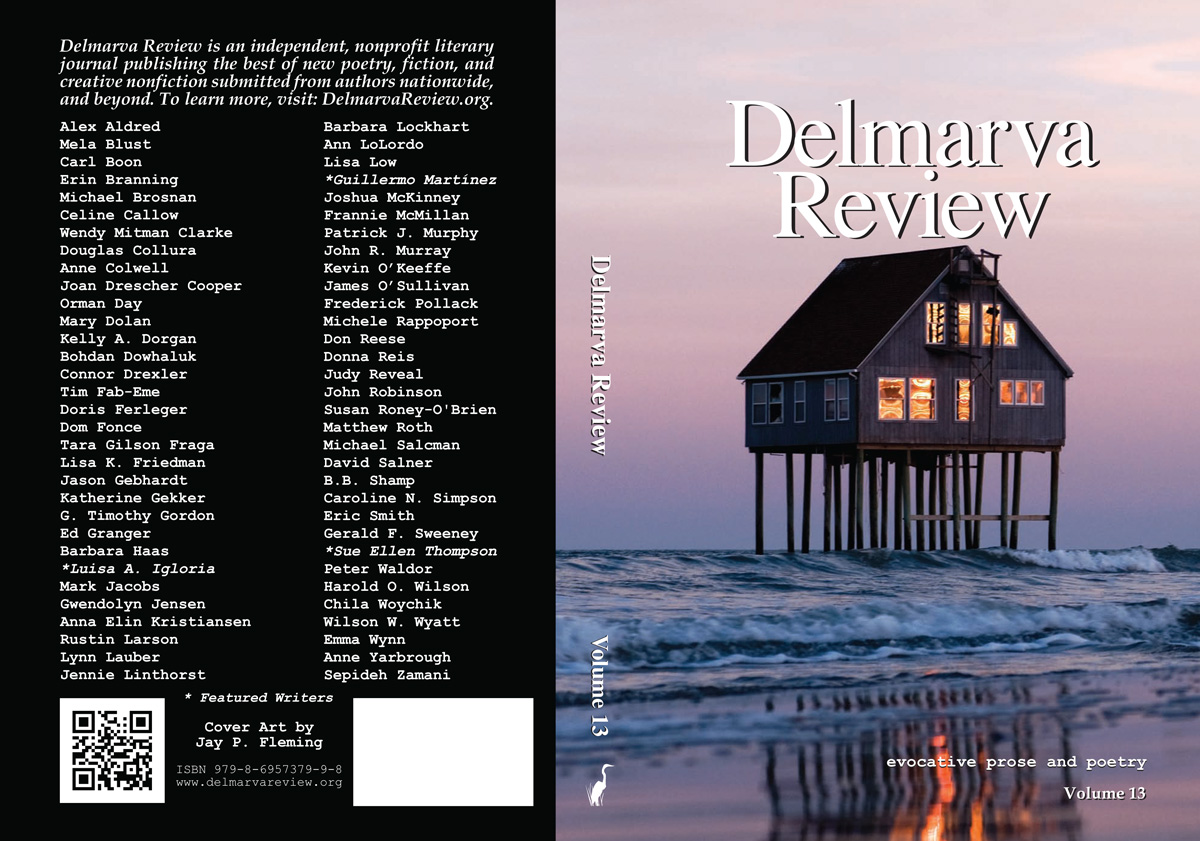
Delmarva Review announced publication of its 13th annual literary journal presenting new poetry, short fiction and creative nonfiction by authors from 21 states, the District of Columbia and 5 other countries.
“The new issue is our largest, with 362 pages filled with exceptional new prose and poetry,” said Wilson Wyatt, executive editor. The work of 64 writers was selected from thousands of submissions during the year.
The review also announced the opening of the submission period today (November 1), for the 14th issue. It will remain open until March 31, 2021. Editors read all submissions. There are no reading fees. Submissions are made electronically through Submittable. Guidelines and submission access can be found on DelmarvaReview.org.
“A number of human themes are represented in this issue. One, in particular, gives life to the others—change. We strive to deal with change in our daily lives,” Wyatt writes in the opening Preface. “There have been mega-changes in the last year, ones sharply affecting the human condition: a worldwide pandemic, climate change, and harsh societal division, to name a few. While change is uncomfortable, often confronting personal denial, it finds its natural place in all forms of writing.”
The cover image, “Cedar Island Watch House,” by contributing photographer Jay P. Fleming, of Annapolis, Maryland, captures the feeling of nature’s power and symbolizes the realities of climate change. The “watch house” has since been swept into the sea.
This issue highlights the writing of three featured authors with interviews by the review’s editors, each followed by the writer’s original work. Sue Ellen Thompson, from Oxford, Maryland, is interviewed about selecting memoir over poetry to write about the demise of a close friendship. Her answers reveal thoughts about memoir as a form.
Acclaimed Argentine author Guillermo Martínez is interviewed by fiction senior editor Harold O. Wilson about writing fiction and specifically about Martínez’s story, first published in English in this edition. Poetry editor Anne Colwell interviews Luisa A. Igloria, of Norfolk, who was recently named Poet Laureate of Virginia, about influences on her poetry, including seven of her new poems in this edition.
Delmarva Review was created to offer writers a valued home in print to publish their best writing at a time when many commercial publications were reducing literary content or closing their doors.
The journal favors the permanence of the printed word, but it also publishes electronic versions to meet the digital preferences of readers. Both paperback and electronic editions are immediately available at Amazon and other major online booksellers.
Delmarva Review’s contribution to the writing community is reflected in part by the breadth of original work selected since the review’s origin in 2008. The journal has published new poetry and prose by 390 writers. They are from 42 states and 14 other countries. About half are from the Delmarva and Chesapeake region of the Mid-Atlantic. Seventy-two have been nominated for a Pushcart Prize. Some have attained notable attention in “best of” anthologies or received acclaim from other literary critics and editors.
In addition to Wyatt, the journal’s staff for this edition includes Bill Gourgey, the managing editor who designs and publishes the review, fiction senior editor Harold O. Wilson, fiction coeditors James O’Sullivan and Lee Slater, poetry editor Anne Colwell, poetry assistant editor Wendy Elizabeth Ingersoll, creative nonfiction editor Ellen Brown, book section editor Gerald Sweeney, copy editor Jodie Littleton, and treasurer Judy Reveal.
Published by the Delmarva Review Literary Fund Inc., a 501(c)(3) nonprofit organization in Talbot County, the journal receives partial funding support from individual tax-deductible contributions and a grant from the Talbot County Arts Council, with revenues from the Maryland State Arts Council.
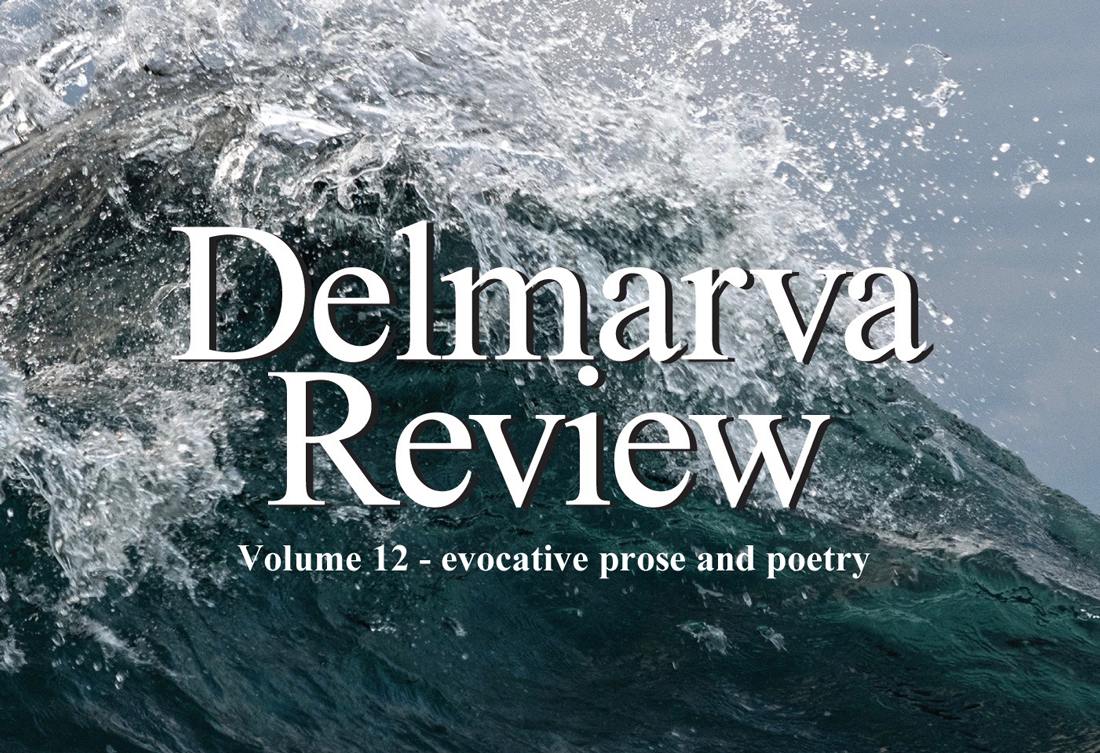
From the cover photograph “Rough Water” by Jay P. Fleming
The Purpose of a Literary Journal – From my “Preface” as editor of the Delmarva Review
As a culture, we celebrate great literature. The best only comes along on occasion, at wide intervals of time. But we would have nothing to celebrate, ever, without the dogged perseverance of dedicated writers who struggle every day to produce their best work. Those who aspire to be better…to be the best…are the ones who fill the pages of established literary journals. The best writers have accessed something special in the hearts and feelings of readers…free of boundaries, and over time.
It is a privilege for literary journals to be among the first to present this writing. And, it is a privilege for writers to have their work selected for publication in an independent literary review.
Welcome to the twelfth annual edition of the Delmarva Review, our current contribution to discovering the best of new literary work. Our editors selected the original prose and poetry of fifty-three authors from thousands of submissions. Individually and collectively, the writing in this volume touches us as human beings. We can also enjoy the author’s craft and unique voice in the telling of stories and poetry.
Our editors selected 72 poems, 10 short stories, and nine nonfiction essays. We also reviewed six recent books of special interest, by regional writers. In all, the authors come from 17 states, the District of Columbia, and four other countries.
We are especially pleased to feature the poetry of Meredith Davies Hadaway. Poetry Editor Anne Colwell interviewed Meredith about her work, and six of her poems follow the interview.
While there is not one common theme emerging from this year’s work, there is an existential darkness that embodies many of the stories and poems. Perhaps that is a sign of our times.
As our Fiction Editor Hal Wilson described it, “In this post- truth era laced with self-serving cynicism, each author has unearthed a note of truth. It is the affirmation of life that runs counter to the basic Western belief that human beings are fundamentally flawed.” The authors face the reality of life; they find something of value through their writing, something worth nourishing in the heart of every human being.
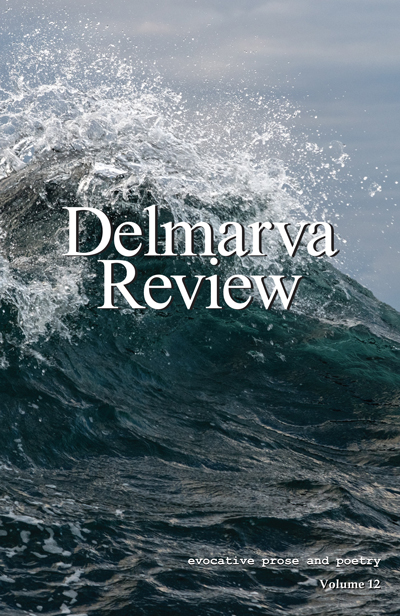
The cover photograph, “Rough Water,” by contributing photographer Jay P. Fleming, perfectly embodies the themes from this year’s selections. Jay’s photograph captures the feeling of nature’s power and passion, which is expressed throughout this year’s writing.
Front cover, Delmarva Review, Volume 12
This edition contains surprises. Pay attention to James Norcliffe’s poem, “The Man Who Turned Himself Into A Gun.” Norcliffe, from Christchurch, New Zealand, sent his poem to the Review soon after the mosques’ shootings in March.
Three startling pieces of writing address mental illness, from varying, highly personal perspectives. In our culture, we need this lens now more than ever.
As a journal, our focus is on the voice and literary qualities of authors’ work to tell their stories. We are impressed by the courage and clarity of a writer to reveal skillfully a personal feeling or truth that will be remembered. They represent human challenges in a changing world. In most cases, the stories take on more than one meaning. In all cases, the voice is authentic.
Delmarva Review was created to offer writers a valued venue to publish literary writing in print at a time when many commercial publications were shutting down. We favor the permanence of the printed word, but we also publish an electronic edition to meet the digital preferences of many readers. Both print and electronic editions are immediately available at Amazon.com and other major online booksellers.
We welcome submissions from all authors who pursue literary writing. Our editors read each submission at least once. Since the first issue, we have published the new work of over 340 writers from 42 states, the District of Columbia, and 12 foreign countries. Fifty-one percent are from the tri-state Delmarva and Chesapeake Bay region. Sixty have been nominated for a Pushcart Prize, and others have received notable mentions in Best American Essays and other publications.
As a 501(c)(3) nonprofit literary journal, we exist for aspiring writers and discerning readers. This is a contribution to our culture. We are greatly appreciative of the funding support we receive from individual tax-deductible contributions and from the Talbot County Arts Council, with revenues from the Maryland State Arts Council.
Wilson Wyatt, Jr.
Editor
Email: editor@delmarvareview.org
Delmarva Review, Volume 11 – evocative prose and poetry
One of the great ironies in the writing business is the persistent misunderstanding by many writers of the purpose of literary journals. Message to writers: We’re not against you; we exist for you.
Here is a good example of the potential value of literary reviews. Recently I received a personal email from an aspiring poet thanking us, as the editors of Delmarva Review, for printing his work four years earlier. We had published six of his poems, as a collection, to show the strength of his voice. In his email, the poet explained that our belief in his work bolstered his perseverance to write his best work, which resulted in a publisher producing his first book, as well as his receiving a National Endowment for the Arts literary fellowship.
He was excited; he shared his exhilaration. As executive editor, I felt we had received the ultimate reward for our efforts. Delmarva Review had succeeded in meeting a major objective—to encourage writers in their pursuit of literary excellence. It was working.
However, my sense of satisfaction was short-lived.
Later that day, I attended a writers’ reading at a local library. I enjoy hearing authors tell their stories in their unique voice. One of the writers came up to me to complain, with some bitterness, that after several repeated rejections, that person would never again submit to our journal. It was disheartening, but I listened. I explained why acceptance in Delmarva Review was competitive and to keep trying. Reliance on high standards assures a publication that earns respect throughout the literary community. That respect is totally transferrable to the writers whose work we publish.
We receive thousands of submissions annually. At least two experienced editors or readers read every one of them (at no cost to the writer). If a writer’s work is accepted, it is an accomplishment. Our readers–who include writers, editors and teachers–should expect to read a higher quality of writing in a literary journal than in a standard commercial magazine or book.
Unfortunately, rejection is a necessary part of the process. Any way you say it, rejection is rejection.
About rejection – We editors often tell each other that experienced writers understand rejection. But, the truth is, we’re all human, and one of the fallacies of human behavior is the frequent inability by artists, experienced or not, to recognize and appraise the limits of their own writing. Self-appraisal of an author’s writing is usually tainted by bias. Hopefully, we all like our own work. That’s only the beginning. Developing the ability to make a realistic assessment and knowing where to market one’s work is very, very difficult. But, not to try assures the hardness of rejection.
Speaking for Delmarva Review, we created it for the benefit of writers. “Literary” refers to writing that rises to a high artistic level. Cutting through a lot of philosophical thought, it is simply the pursuit of the best of literary art and beauty. It is beyond craft. Literary journals help assure a societal pathway toward continued literary excellence.
The literary journal gives writers an opportunity to publish their best efforts, a place to showcase their highest aspirations, and to be recognized for it. At a time when so many commercial publications are retracting, or going out of business, journals offer a respected, permanent place to print the best writing a writer can create. We have no other agenda. We are independent. We are nonprofit, and our editors draw no salaries. We care about the appearance of the writer’s words on a printed page and the thoughts behind them. Above all, we hope that our discoveries become the discoveries of other discerning readers and publishers who actively seek the best writing they can find.
The benefit to us is the reward of knowing that we have encouraged writers to exceed by offering a possible venue for their most creative expression.
So…don’t give up. If you’re a writer, a literary journal like Delmarva Review is your friend. We take pleasure in discovering your best. Rejection may or may not be a part of that process. But, if you try, you may very well succeed at something very special, very fulfilling.
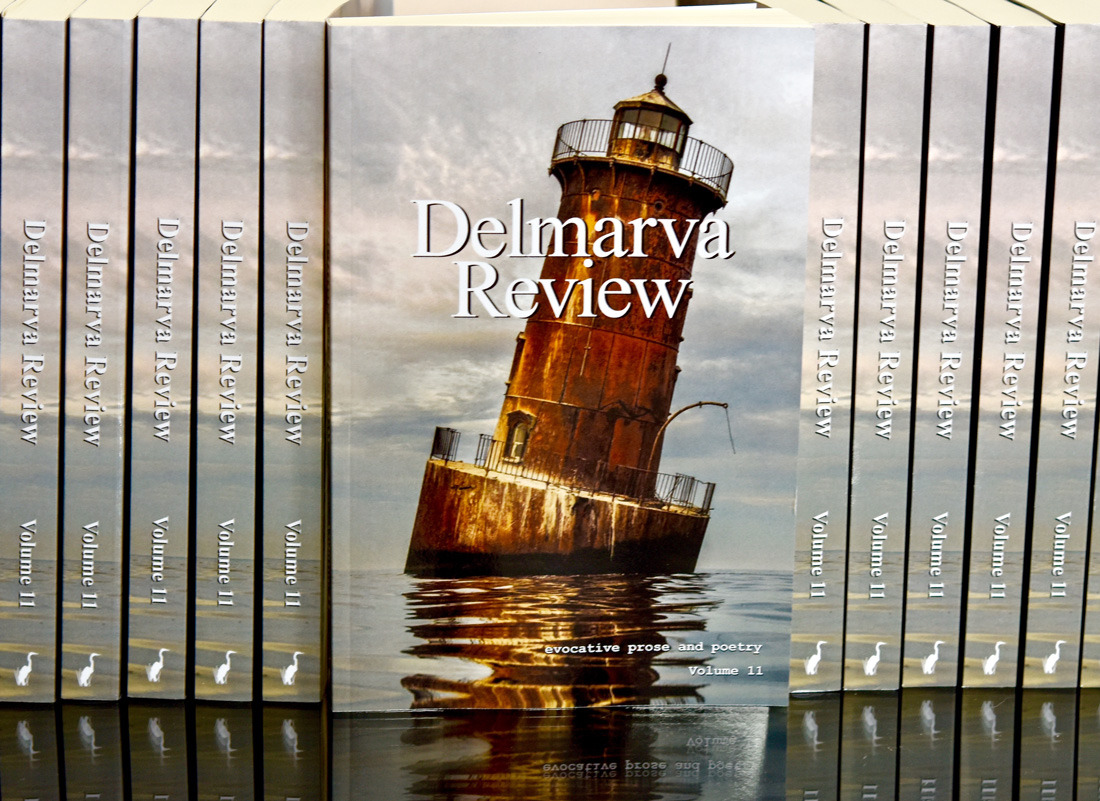
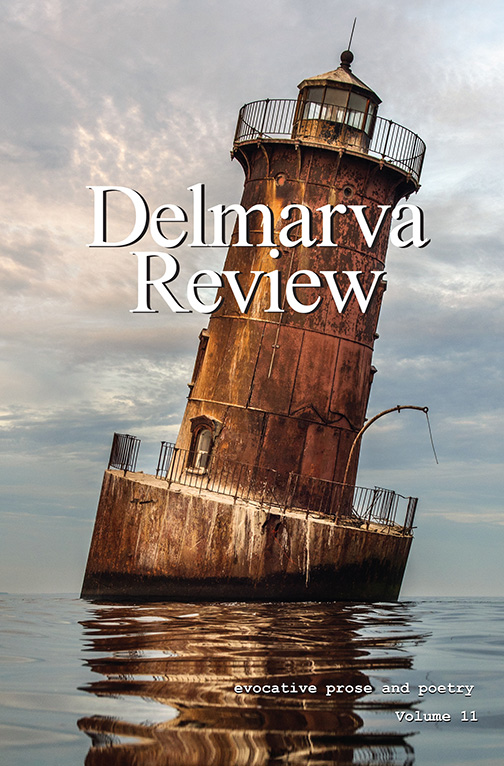
Delmarva Review, Volume 11, cover photograph “Sharps Island Light” by Jay Fleming
Welcome to Delmarva Review, Volume 11, a literary journal publishing exceptional new writing. With humble deference to the great literature of the ages, this collection of poems, short stories, and creative nonfiction is proof that all stories have not already been told. Here, each writer gives us an original, new voice. The creative pen endures.
A common theme emerges from this year’s writing: the discovery or realization of one’s individuality, frequently during difficult times. Adversity leaves its impression on one’s identity; it shapes us. It can also be celebrated. Individuality and creativity are inseparable.
As a journal, the review’s focus is on the voice and literary qualities of authors’ work to tell their stories. We are impressed by the courage and clarity of a writer to reveal skillfully a personal feeling or truth that will be remembered. They represent human challenges in a changing world. In most cases, the stories take on more than one meaning. In all cases, the voice is authentic.
Our editors selected the work of 45 authors that stood out from thousands of submissions. Enclosed are 57 poems, 10 short stories, 11 nonfiction and four micro nonfiction selections. We also reviewed five recent books by regional writers. In all, the authors come from 19 states and two other countries.
Delmarva Review was created to offer writers a valued venue to publish literary writing in print at a time when many commercial publications were shutting their doors or limiting literary content. We still favor the permanence of the printed word, but we also publish an electronic edition to meet the digital preferences of many readers. Both print and electronic editions are immediately available at Amazon.com, Kindle, and other major online booksellers.
Submissions are welcome from all authors who pursue literary writing (writing as an art). Our editors read each submission. Since the first issue, we have published the new work of over 300 writers from 40 states, the District of Columbia, and 10 foreign countries. Fifty-one percent are from the tri-state Delmarva and Chesapeake Bay region. Over 50 have been nominated for a Pushcart Prize, and others have received notable mentions in Best American Essays and other literary publications.
Delmarva Review is an independent, nonprofit literary journal supported by a grant from the Talbot County Arts Council, with revenues from the Maryland State Arts Council, and from individual tax-deductible contributions.
As the editor, I am deeply appreciative of the personal dedication of our genre editors, each utilizing their experience and skill to select compelling fiction, poetry, and creative nonfiction from thousands of writers every year. The editors and advisors include: Bill Gourgey, Managing Editor, Harold O. Wilson, Fiction Editor, Anne Colwell, Poetry Editor, Cheryl Somers Aubin, Nonfiction Editor, James O’Sullivan, Fiction Reader, Wendy Elizabeth Ingersoll, Poetry Reader, Gerald F. Sweeney, Book Review Editor, Jodie Littleton, Copy Editor, and Michael Pretl, Legal Advisor.
Wilson Wyatt, Executive Editor
Submissions period open from November 1, 2018 to March 31, 2019 for Volume 12, publishing in the fall, 2019.
AT YEAR’S END, I can’t help but feel some sense of introspection. This year, I opened an 1895 edition of The Gilded Age, A Tale of To-Day, by Mark Twain and Charles Dudley Warner. It was Twain’s novel about the turn of the century. The book was a gift to me from my father, who passed away in 1996.
When the book was published, the term “Gilded Age” became synonymous with graft, materialism, and corruption in public life. The plot opens as a poor Tennessee family, the Hawkins family, dreams of affluence by selling 75,000 acres of worthless Appalachian land acquired by their patriarch, Silas Hawkins. Truth, lies, and exaggeration color aspirations shaped by want, greed, and deceit. Mark Twain’s wonderfully sarcastic wit and his gift for description present an era of uncanny resemblance to the politics of today. The subtitle, containing the words “To-Day,” remains as current as human behavior’s lack of change.
In the 1950’s, my father bought some of the Cumberland mountain land once owned by Mark Twain, and I remember our family visits to that region. I remember the Obed River, where the “gold” glistening along the stream in the afternoon sun was actually iron-stained rock from abandoned coal mines.
Having recently read two wonderful memoirs, Hillbilly Elegy (by J.D. Vance) and The Glass Castle (by Jeannette Walls), along with a fine historic book, Night Comes to the Cumberlands (by Harry Caudill), Twain’s description of the rugged East Tennessee hills comes alive with relevance.
More important to me, I can now see how reading The Gilded Age directly affected my father’s views of public service as well as providing for his family. I’ll be writing more about this. But, for now, I’ll enjoy turning the brittle pages, carefully, of this 1895 edition by Mark Twain…savoring his descriptions of the age…with relevance today.
First page, Chapter I, The Gilded Age, original illustrated edition – click on image to enlarge
I am pleased to publish “Delmarva Review” announcements on my blog, as chairman of the editorial board and executive editor. All of us are proud of its continued progress over 10 years to publish outstanding literary work. – Wilson Wyatt
Delmarva Review announced publication of its tenth annual literary journal presenting original poetry, short stories and nonfiction from 40 authors in 18 states. The Review welcomes submissions from all writers.
“The tenth anniversary issue touches on the themes of change and hope,” said Emily Rich, editor of the tenth edition. “Amidst the uncertainties of life, people grasp for what is eternal in the human condition.”
The 2017 first place winner of Chesapeake Voices Prose Contest is featured in this edition. The short story, “The Future is Not For Sale,” by Jeremy Griffin, of South Carolina, was hailed by contest judge Laura Oliver, of Maryland, as “sophisticated with especially strong characterization.”
Editors selected 41 new poems, 11 short stories, five nonfiction essays, and five book reviews for the tenth edition.
Since its first year, the journal has printed the original literary work of over 280 authors. Some are newly discovered. In all, they have come from 35 states, the District of Columbia, and 10 other countries. About half are from the Delmarva and Chesapeake region. Fifty-three works have been nominated for a Pushcart Prize, and some have received notable mentions in anthologies and critical journals.
Delmarva Review is published by the Delmarva Review Literary Fund (a 501(c)(3) nonprofit), supported by individual contributions and a grant from the Talbot County Arts Council, with funds from the Maryland State Arts Council.
The submission period for the 2018 issue is open now through March 31, 2018. Submission guidelines are posted on the website www.delmarvareview.com.
The journal produces print and electronic editions. Both are available worldwide via Amazon.com and other online booksellers. It is downloadable in a digital format for tablets, computers, smart phones, and other reading devices. Two-year subscriptions are available at a discount through the website.
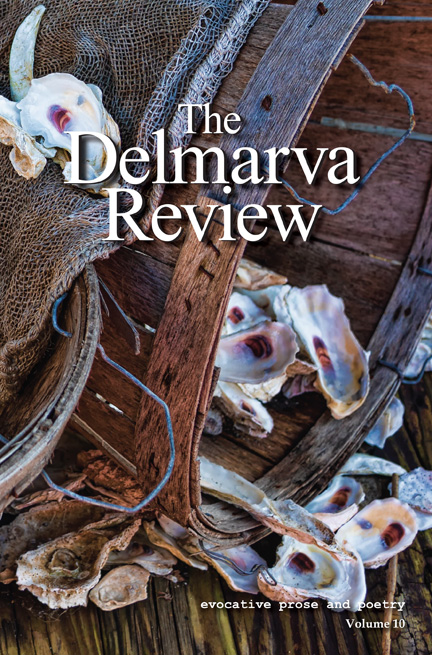
Photographer Calvin “Cal” Jackson’s color image “Recycle” was selected for the tenth anniversary cover of the Delmarva Review, to be published on November 1.
Photograph “Recycle” by Cal Jackson – Click on photo for full size image
Cal Jackson’s cover image “Recycle” shows shucked oyster shells, in rustic old bushels, to spread on bay oyster beds, providing a solid hold for oyster larvae and a future crop of oysters. The photographer, from Easton, MD exhibits at galleries and shows in Baltimore, Easton, Cambridge and Chestertown, MD, as well as Brooklyn, New York. He’s a retired accountant and former audit manager for information technology with the U.S. Army.
The Delmarva Review is a nonprofit literary journal publishing compelling new poetry, fiction and nonfiction from writers within the region and beyond. It celebrates its 10th anniversary edition in November. The Review is supported by the Eastern Shore Writers Association, individual contributions, and a grant from the Talbot County Arts Council with funds from the Maryland State Arts Council.
The next submission period for literary work and cover art is from November 1, 2017 to March 31, 2018, for the eleventh edition. See the website for information, at www.delmarvareview.com.



 WILSON WYATT JR